Backpacks for Laptop-and-gym Days
A remote-work review of backpacks for laptop-and-gym days, looking at setup time, reliability, portability, and what breaks when the calendar gets crowded.
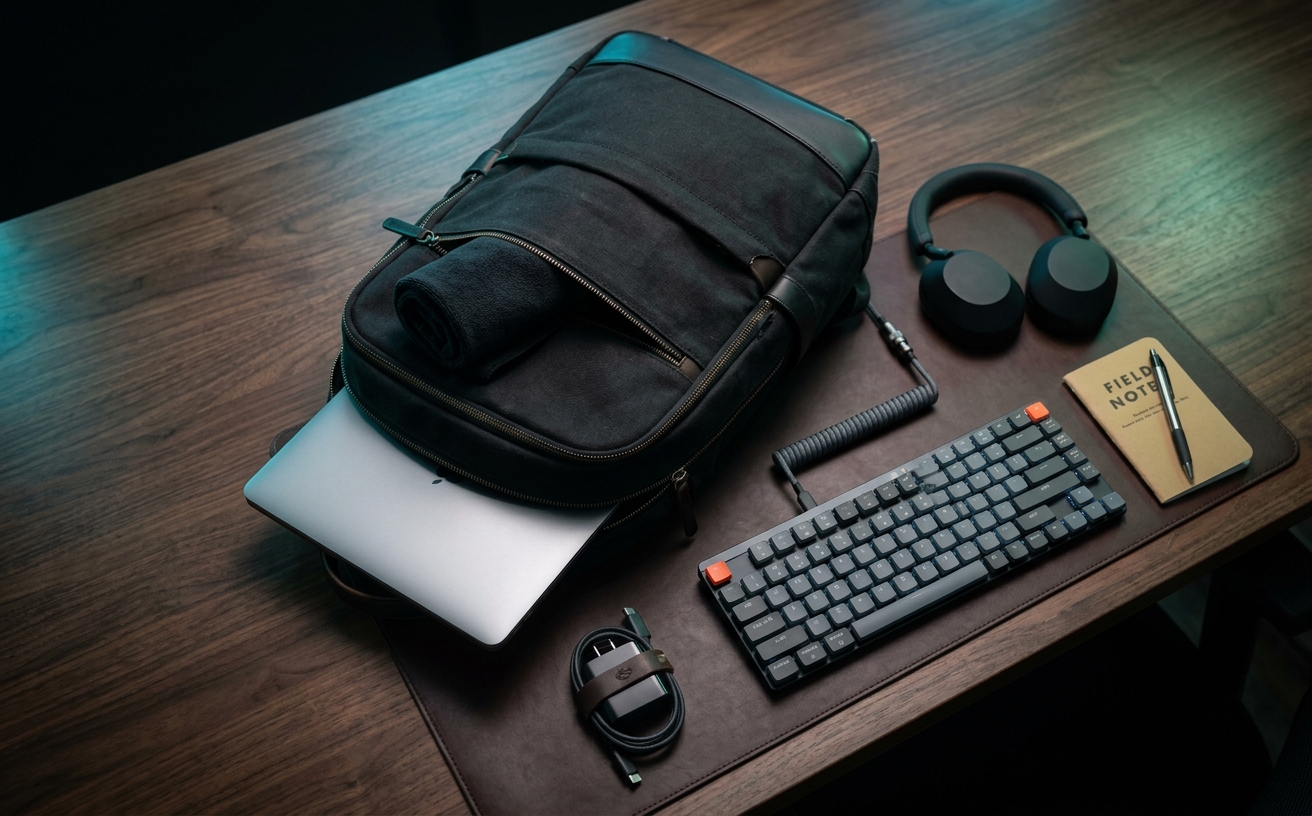
Carrying a laptop and gym gear usually results in a frustrating compromise: either a bulky duffel that ruins a professional silhouette or a sleek tech bag that forces you to cram damp clothes next to a premium machine. The friction lies in finding a bag that handles the transition smoothly, allowing you to move from deep work sessions to a workout without mental or physical drag. This guide examines the structural, material, and organizational requirements for backpacks that successfully bridge the gap between the desk and the gym floor. By focusing on physical isolation, access mechanics, and load carriage, you can eliminate the daily hesitation of packing and ensure your hardware remains protected while your routine remains uninterrupted.
Isolating the Technology from the Sweat
The primary failure point of hybrid backpacks is cross-contamination. When you pack a laptop, a charger pouch, lifting shoes, and gym clothes into a single main volume, you introduce moisture and odor to your electronics. Decision friction drops significantly when you narrow your search strictly to bags featuring a dedicated, suspended, and waterproof-zippered laptop compartment that is physically isolated from the main cavity. This separation ensures that a leaking water bottle or a damp towel cannot compromise your primary work tool.
A suspended laptop sleeve prevents the bottom edge of your device from striking the floor when you drop your bag in a locker room or next to a cafe table. Look for a false bottom of at least an inch. This physical barrier should be paired with a separate shoe compartment or a TPU-lined wet zone. If a bag requires you to pull out your gym shorts to access your power adapter during a client meeting, it fails the basic usability requirement for a split-focus day.
Volume allocation matters just as much as separation. A twenty-four-liter bag might sound spacious, but if the tech compartment eats up ten liters with rigid padding, your gym gear will be compressed. The ideal ratio usually involves a slim, rigid back panel for the laptop and documents, leaving a cavernous, unstructured front section for clothing and shoes. This architecture allows the bag to expand when loaded with athletic gear and compress neatly when you are just carrying your work essentials.
Maintaining a Professional Silhouette
A bag that looks appropriate in a corporate elevator rarely looks at home on a gym floor, and vice versa. The friction here comes from choosing between tactical webbing and fragile heritage canvas. The middle ground requires technical fabrics that offer matte finishes and structural integrity. Materials like ballistic nylon, Cordura, or sailcloth variants provide high abrasion resistance without screaming outdoor expedition. These fabrics withstand the rough surfaces of locker rooms while maintaining a subdued, professional appearance in the office.
Hardware choices dictate the visual volume of the bag. Oversized plastic buckles and bright zipper pulls draw attention and disrupt a clean silhouette. Instead, prioritize bags with tonal hardware, hidden zippers, and minimal exterior branding. A streamlined exterior ensures that when you walk into a client meeting or a quiet coworking space, your bag reads as a professional tool rather than a piece of athletic equipment. This visual restraint is critical for moving seamlessly between entirely different environments.
Structural foam is the unsung component of a hybrid bag. A backpack that sags or collapses into a puddle of fabric when empty looks unprofessional and makes packing difficult. Bags integrated with high-density EVA foam panels maintain their shape regardless of how much is inside. This means the bag looks identical whether it is holding just a laptop and a notebook or is fully loaded with a change of clothes and a pair of running shoes, projecting consistency.
The Clamshell Versus Top-Loading Debate
How you pack and unpack dictates how much time you waste in locker rooms and coffee shops. Top-loading bags, while excellent for weather resistance, create a black hole effect. Finding a specific charging cable or a clean pair of socks requires unpacking half the bag. For the dual-purpose day, the clamshell or panel-loading design eliminates this friction entirely by allowing the bag to open flat like a suitcase, providing immediate visual access to all your stored items simultaneously.
Clamshell access means you can lay the bag on a locker room bench, pack your gym clothes in the main compartment, and zip it shut without disturbing the tech panel. When you transition to a desk, you can access the laptop compartment independently. This dual-access method respects the boundary between your two environments. You never have to expose your sweaty gym gear to your coworkers just to retrieve a wireless mouse or a notebook for a sudden meeting.
Internal organization within these compartments should be intentional but sparse. Too many built-in pockets dictate exactly what you must carry, adding weight and limiting flexibility. Seek out bags with a few strategic mesh pockets for small items like keys and deodorant, but rely on modular packing cubes or tech pouches for the rest. This modularity lets you strip the gym gear out entirely on days when you only need to work, without leaving behind a shell of empty pockets.
Managing Moisture in Closed Systems
The reality of the laptop-and-gym day is that damp clothing will sit in your bag while you finish your afternoon focus blocks. Without proper ventilation, bacteria multiply, and the bag develops a permanent odor that no amount of cleaning can fully eradicate. The solution lies in bags that incorporate antimicrobial linings or specific ventilation ports in the shoe and clothing compartments. These features actively work to mitigate the microclimate created by sweaty gear trapped inside a dark space.
A dedicated shoe compartment is standard in many hybrid bags, but its execution varies wildly. A poorly designed shoe pocket eats into the main compartment's volume and traps moisture. The most effective designs use a flexible, coated nylon that can be wiped clean and features subtle mesh gussets or grommets to allow air exchange. This prevents the buildup of trapped humidity that can seep into the structural foam of the bag and compromise the integrity of the materials.
Even with ventilation, separating damp items from dry ones is a mechanical necessity. If the bag lacks a TPU-lined wet pocket, you will need to introduce a standalone dry bag into your system. The goal is to isolate the moisture immediately after the workout. By sealing the wet gear away, you protect your electronics from condensation and prevent the bag's interior fabric from absorbing sweat during the commute home, ensuring the bag is ready for the next day.
Ergonomics for the Heavy Carry
Combining work hardware and gym gear easily pushes a daily carry weight past fifteen pounds. Carrying this load on a single shoulder strap or poorly designed backpack straps leads to fatigue before you even reach the office. Decision friction regarding comfort is resolved by examining the shoulder harness system. Look for straps that are contoured to follow the natural curve of your torso and padded with dual-density foam, which prevents the straps from crushing under a heavy load.
The back panel must manage both weight distribution and heat. A flat nylon back panel will cause you to sweat through your shirt during a brisk walk to the train. Premium hybrid bags utilize molded foam channels or suspended mesh panels to create an air gap between your back and the bag. This airflow is critical for arriving at your first meeting without needing a change of clothes before the gym session has even taken place.
Sternum straps and load lifters are often viewed as overkill for a daily backpack, but they are essential when carrying dense, shifting loads like shoes and water bottles. A removable sternum strap pulls the weight forward, taking the pressure off your shoulders and stabilizing the bag when you are navigating crowded transit or riding a bike. The ability to remove these straps when not needed keeps the bag looking streamlined and appropriate in formal professional settings.
Decision checklist
- Verify the laptop compartment features a one-inch false bottom to prevent impact damage on hard locker room floors.
- Confirm the main clothing compartment uses a clamshell zipper opening for flat packing without disturbing work gear.
- Check for a TPU-lined or waterproof pocket designed to isolate damp workout clothes from the interior.
- Ensure the exterior fabric is a matte-finish technical material like ballistic nylon that resists abrasion subtly.
- Look for dual-density foam shoulder straps and a channeled back panel to manage combined weight and airflow.
Who should skip this
If your daily routine explicitly separates work and fitness—perhaps you leave your gym gear in a car trunk or use a locker rental at your fitness club—a hybrid backpack introduces unnecessary bulk and structural compromises. Those who only carry a tablet and a notebook, or who prefer the aesthetic of a classic leather briefcase, will find the technical fabrics and partitioned volumes of these bags overly complex and aesthetically jarring.
Maintenance note
Hybrid bags require strict hygiene protocols to prevent permanent odor retention. Empty the bag completely every evening, leaving the main clothing and shoe compartments unzipped overnight to allow residual moisture to evaporate. Wipe down TPU-lined wet zones weekly with a mild antibacterial solution, and vacuum the laptop compartment monthly to remove dust and grit that can scratch aluminum chassis. Never put a structured technical backpack in a washing machine; spot clean the exterior with a damp cloth and gentle soap.
The Connected Desk operates independently. We may earn a commission when you purchase through links on our site, which funds our editorial operations. We do not accept payment for placement, and our gear selections are driven entirely by utility, durability, and relevance to the modern workspace.
FAQ
What is the ideal capacity for a bag holding both a laptop and gym gear?
For most users, a capacity between 24 and 30 liters is optimal. Smaller bags require compromising on shoe size, while anything larger becomes unwieldy on transit and looks disproportionately large in an office.
Can a dedicated shoe compartment fit lifting belts or foam rollers?
Standard shoe compartments fit running shoes but lack depth for rigid cylinders like foam rollers. Flexible items like nylon lifting belts can coil inside, but rigid belts are better strapped externally.
Do I need a waterproof bag if I only commute from a car to an office?
Fully waterproof bags with welded seams are unnecessary for car commutes and lack internal organization. Highly water-resistant materials with DWR coatings and reverse-coil zippers provide sufficient protection for brief rain exposure.
How do I prevent my water bottle from damaging my laptop?
Utilize an external water bottle pocket that keeps liquids physically outside the bag. If carrying internally, use a double-walled stainless steel vessel with a locking threaded cap, stored away from the laptop.